An Close to Chernobyl

This being the last blog post, I’ve decided I will be ending off with some more practical and easily applicable information about radiation and not random facts about Chernobyl and how reactors work.
Instead, I will tell you how bananas can kill you.
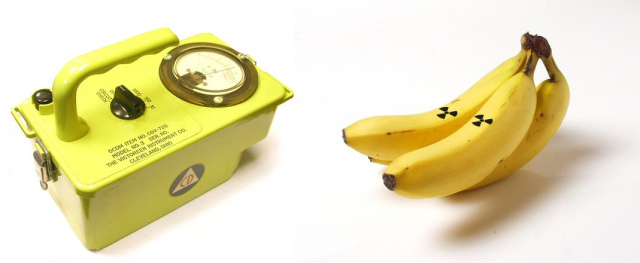
In case you didn’t know, bananas are HIGHLY radioactive. Eating one at just the wrong time could, and most likely will, eventually kill you…just kidding! In order for someone to die from ingesting bananas, they would have to consume approximately 100 million of them at once, which isn’t really possible. So you’re okay to eat bananas!
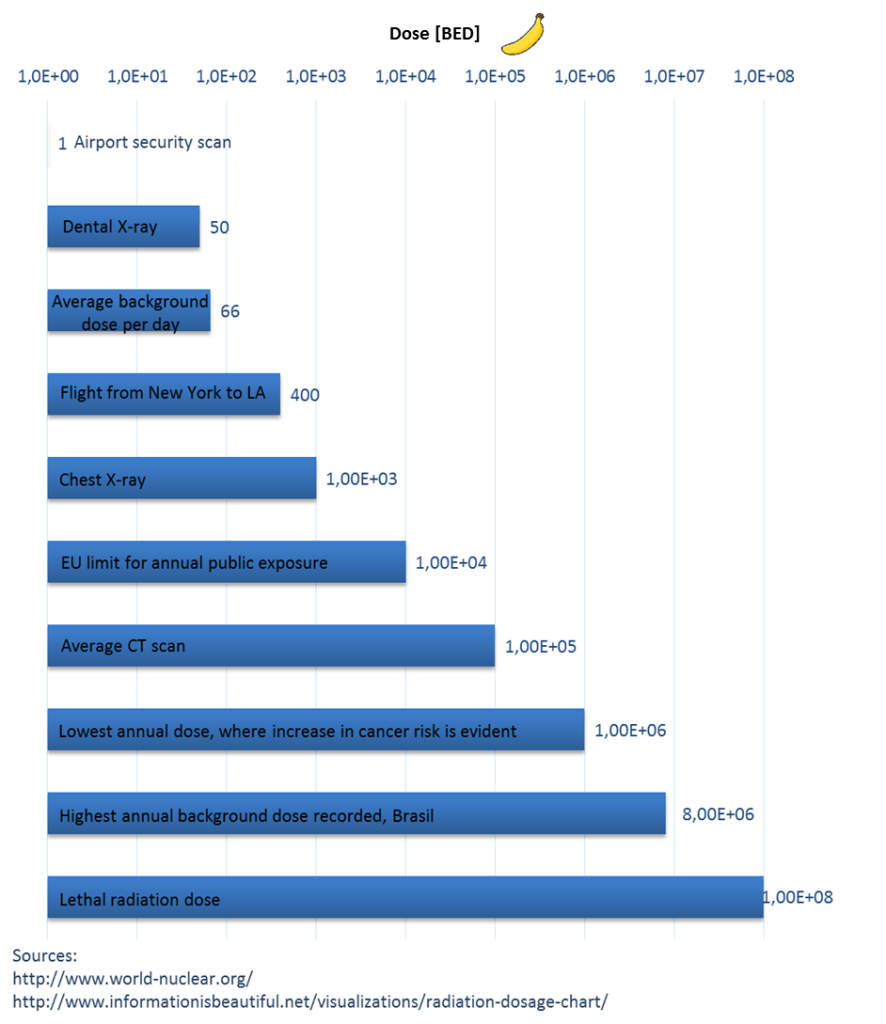
So, eating 100 million bananas will kill you. But why? Well, apart from your stomach exploding, gobbling up eleven-thousand miles worth of bananas contains approximately enough radiation to be lethal. Because of the natural amounts of potassium in bananas, and since potassium decays (at least the kind found in bananas), they are unusually radioactive compared to other foods. Eating one banana is equivalent to walking through an airport security scanner, as shown in the chart farther up this page. The chart measures each example in BED, which stands for Banana Equivalent Dose. Pretty cool, huh?

So, next time you go to get a CT scan, think: If only I would have just eaten ninety thousand bananas instead, I wouldn’t have to be here right now.
The Reactor That Was An Actual Pile

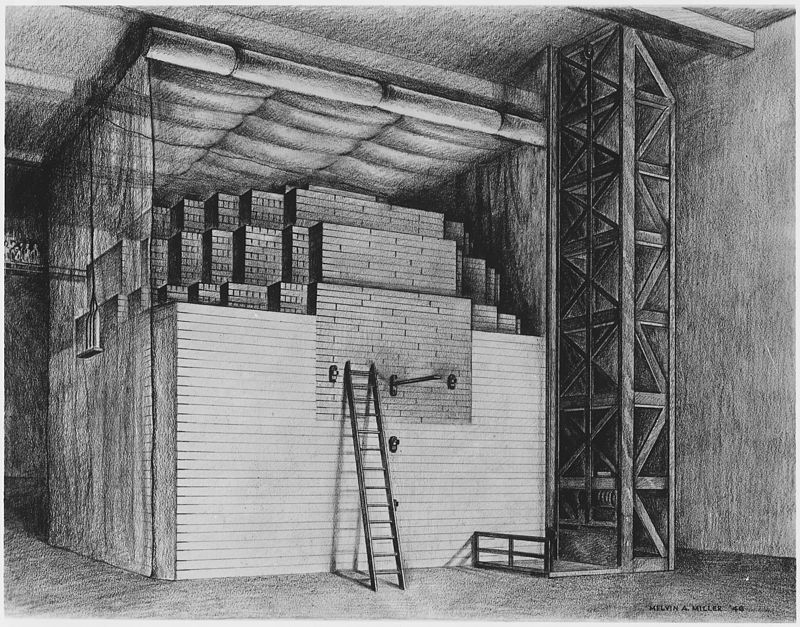
The Chicago Pile-1 (above) was the first man-made self-sustaining reactor ever to be created. It was built using many graphite blocks which kept radiation from leaking out and keeping the core of the reactor moderated. This reactor was built under one of the football fields of the University of Chicago in Chicago, USA. This has become a historical area because of this event. The reactor was created as part of the Manhattan Project.

The Liquidators

A massive explosion launching radioactive material all over the place leaves a pretty big mess. The military personnel and other construction workers that were ordered to start cleaning up this Soviet extravaganza were the people we call the “liquidators”. This term refers to people who liquidate assets of a business and distribute the proceeds to the creditors. These people did not do that, but rather took the assets (radioactive debris) and and delivered it to the creditors (underground radioactive waste areas).

Image result for gif of chernobyl liquidators

As Wikipedia puts it, “The liquidators are widely credited with limiting both the immediate and long-term damage from the disaster.”, which I totally agree with. If it weren’t for the hundreds of thousands of cleanup crew at the plant, the damage caused by the disaster would have been even more disastrous.

Back to Talking About Chernobyl

Image result for chernobyl disaster
Reactors No. 4 and No. 3 after the disaster

So, it has been a while since any radioactive information has been spilled over this disaster on this blog page. Today, I will be going through how this wonderful Soviet reactor made a big mess a little more.
The Chernobyl Power Plant in Northern Ukraine was, to say the least, not very safe. The way this specific reactor worked was that it provided its own power to run the water pumps that pumped cool water into the reactor to keep it from overheating and resulting in a core meltdown. This meant that once the reactor was shut off, residual heat from the reaction continued to heat water inside of the reactor. See where I’m getting? There was about a one-minute window between the shutdown of the reactor and the startup of the backup diesel generators to provide power for the remaining cooling. 

What caused the Chernobyl Nuclear Disaster?

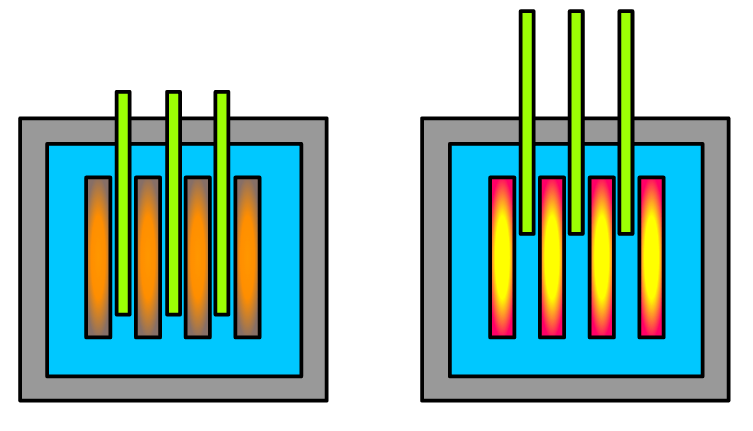
It was a combination of numerous aspects that brought reactor 4 to a close that day, and the eventual shutdown of the entire Chernobyl Power Plant. One of the major reasons being the flawed reactor design (the RBMK reactor), such as the tips of the control rods, that are used to slow down fission rate, being made of graphite.

Graphite is a moderator in fission, meaning it slows down the kinetic speed of neutrons so the fission rate increases, resulting in higher efficiency in the reactor. This can be a problem when trying to lower the power of an RBMK reactor, as the control rods that are trying to slow down the fission rate momentarily spike it. This is what happened at Chernobyl.

Understanding Chernobyl

Now, I am no way an expert on the Chernobyl Nuclear Disaster, or really know very much about nuclear technology whatsoever. What I can say, however, is that the subjects interest me immensely and I would like to share that interest with you, the reader. I hope you find this somewhat interesting!

What is “Chernobyl”?

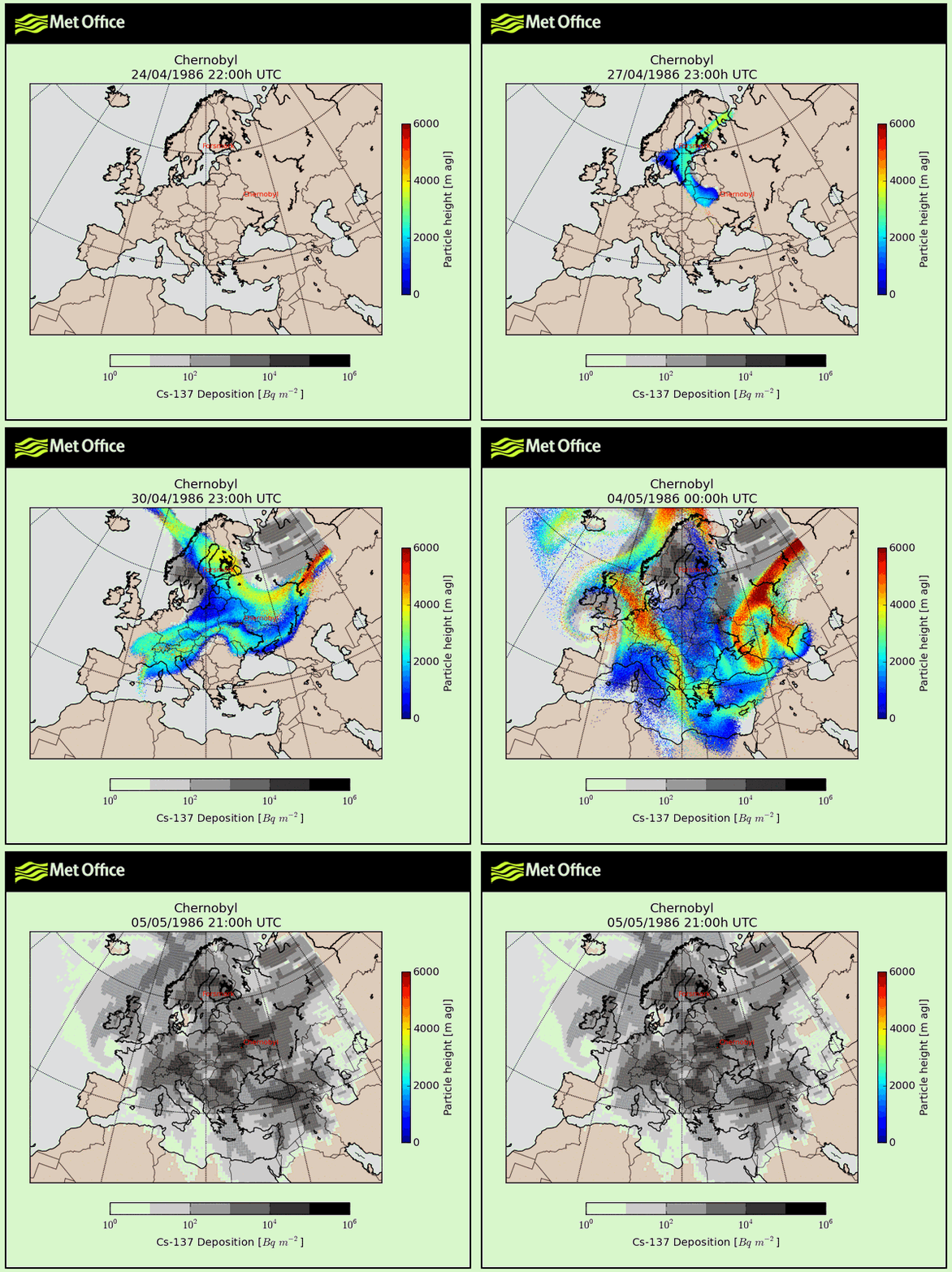
“Chernobyl” is the name of the nuclear power plant that exploded on April 26th, 1986 in Ukrainian SSR (modern day Ukraine). The explosion caused radioactive material to be released into the environment and over most of Europe and Western Russia.

Abnormally high levels of radiation were deposited all over Europe, Caesium-137 to be specific, which is a product of fission (the reaction that occurs in a nuclear reactor).

Design a site like this with WordPress.com
Get started